

 Facebook
 X
X
 Pinterest
 Copy Link
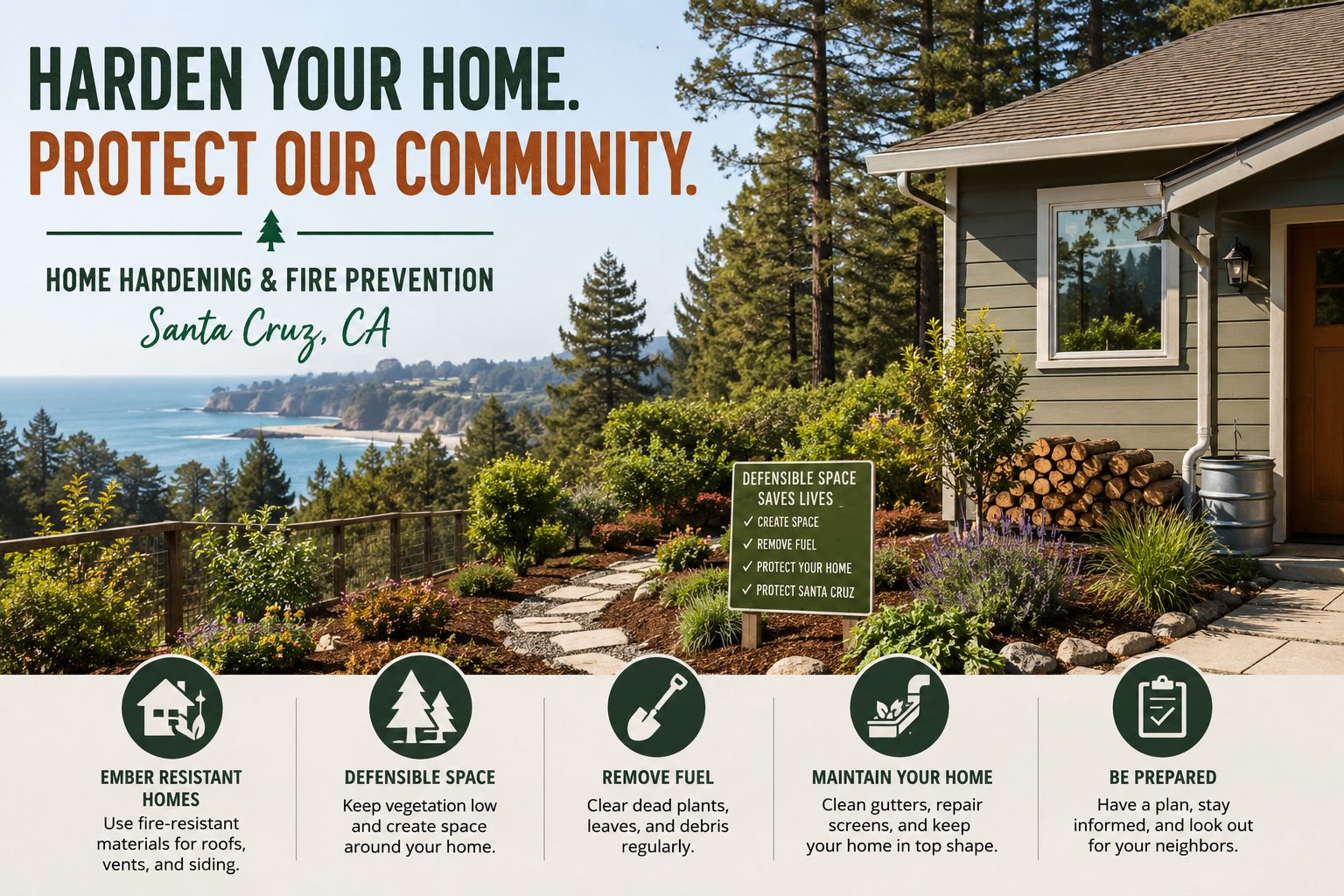
Defensible Space and Home Hardening in Santa Cruz County, California
Wildfire risk is a reality for many homeowners in Santa Cruz County. From the redwood forests in Boulder Creek and Ben Lomond to the rural hillsides above Corralitos and Aptos, homes throughout the county face increasing fire danger during dry and windy conditions.
Fortunately, there are practical steps homeowners can take to reduce risk. In fact, experts consistently agree that a combination of defensible space and home hardening gives a home a much better chance of surviving a wildfire.
If you own property in Santa Cruz County, this guide explains exactly what you should do to help make your home more fire safe.
What Is Defensible Space?
Defensible space is the safety buffer between your home and surrounding vegetation. It helps slow or stop the spread of wildfire while also giving firefighters a safer area to defend your property.
California law generally requires 100 feet of defensible space around homes located in high fire hazard areas. However, simply meeting the minimum requirement is not always enough in Santa Cruz County’s steep and heavily wooded terrain.
Instead, homeowners should focus on creating layered protection zones around the structure.
Zone 0: The First 5 Feet Around Your Home
This is the most important area of your property.
According to CAL FIRE Defensible Space Guidelines, embers are one of the leading causes of homes igniting during wildfires. Because of this, the first five feet around your home should be as noncombustible as possible.
What Homeowners Should Do
- Remove bark mulch and wood chips
- Use gravel, stone, pavers, or concrete instead
- Clear leaves and pine needles regularly
- Remove dead plants and dry vegetation
- Move firewood piles away from the home
- Replace combustible fencing attached to the house
- Avoid storing patio cushions or combustible furniture near siding
- Clean roofs and gutters often
This area is especially critical in Santa Cruz County because many homes sit beneath redwoods, pines, or eucalyptus trees that constantly drop needles and debris.
Zone 1: 5 to 30 Feet From the Home
Next, focus on reducing fuel sources close to the structure.
This area should remain “lean, clean, and green.”
Recommended Actions
- Remove dead grass and weeds
- Trim tree branches away from roofs and chimneys
- Space shrubs apart
- Separate vegetation from fences and decks
- Keep lawns irrigated if possible
- Avoid dense plantings directly under trees
Additionally, trees should not touch one another. CAL FIRE recommends maintaining horizontal spacing between trees and shrubs to reduce fire spread.
On steeper slopes common in areas like Bonny Doon or the Santa Cruz Mountains, vegetation spacing should be even greater because fire moves uphill rapidly.
Zone 2: 30 to 100 Feet From the Home
This outer zone focuses on slowing wildfire before it reaches the structure.
Important Steps
- Cut dry grass to under four inches
- Remove fallen branches and excessive leaf litter
- Thin overcrowded trees
- Create vertical spacing between shrubs and tree canopies
- Maintain clearance around propane tanks and outbuildings
- Remove dead or dying trees
In wooded areas of Santa Cruz County, ladder fuels are a major concern. Ladder fuels are smaller plants or shrubs that allow fire to climb from the ground into tree canopies.
By removing these fuels, homeowners can significantly reduce fire intensity near structures.
What Is Home Hardening?
While defensible space focuses on the landscape, home hardening focuses on the structure itself.
Home hardening means upgrading vulnerable parts of a home so embers, radiant heat, and flames are less likely to ignite it.
Research has shown that homes with fire-resistant features and defensible space are far more likely to survive wildfires.
The Most Important Home Hardening Upgrades
1. Install a Class A Fire-Rated Roof
Your roof is one of the most vulnerable parts of your home.
If you still have a wood shake roof, replacement should be a top priority.
Better options include:
- Composition shingles
- Metal roofing
- Concrete or tile roofing
CAL FIRE recommends Class A-rated roofing materials because they provide the highest fire resistance.
2. Upgrade Vents
Flying embers can enter homes through attic and crawlspace vents.
To reduce this risk:
- Install ember-resistant vents
- Cover openings with fine metal mesh
- Replace damaged vent screens
This is one of the most effective and affordable home hardening improvements available.
3. Replace Combustible Siding and Decking
Wood siding and older decks can ignite easily during ember storms.
Consider upgrading to:
- Fiber cement siding
- Ignition-resistant decking
- Metal or composite materials
Also, keep the underside of decks free of debris and combustible storage.
4. Upgrade Windows
Heat from nearby fire can break glass and allow flames inside.
Dual-pane tempered glass windows perform significantly better during wildfire exposure.
If a full replacement is not possible, prioritize windows facing heavy vegetation or uphill slopes.
5. Remove Combustible Attachments
Fences, pergolas, and attached sheds can create direct fire pathways to your home.
CAL FIRE specifically recommends replacing combustible attachments or creating noncombustible separation areas.
Fire Safety Is Not a One-Time Project
One of the biggest misconceptions about wildfire preparation is that it only needs to happen once.
In reality, defensible space requires continuous maintenance.
In Santa Cruz County, homeowners should:
- Clean roofs and gutters regularly
- Remove fallen needles weekly during fire season
- Reassess vegetation annually
- Trim trees before summer
- Check vents and screens routinely
Even well-prepared properties can become vulnerable again after one windy week in the mountains.
Schedule a Defensible Space Inspection
Homeowners can request inspections and learn more through CAL FIRE.
Helpful Resources
- CAL FIRE Defensible Space Program
- Request a Defensible Space Inspection
- CAL FIRE Home Hardening Guide
- Firewise USA Resources
Many neighborhoods in California are also creating local Firewise communities to improve wildfire preparedness collectively.
Final Thoughts
Wildfire preparedness has become an essential part of homeownership in Santa Cruz County.
The good news is that homeowners can take meaningful steps to reduce risk. By combining defensible space, routine maintenance, and strategic home hardening upgrades, you can dramatically improve your home’s resilience during wildfire season.
Most importantly, start with the highest-priority improvements first. Even small changes — like clearing the first five feet around your home or cleaning debris from gutters — can make a significant difference when embers begin to fly.
